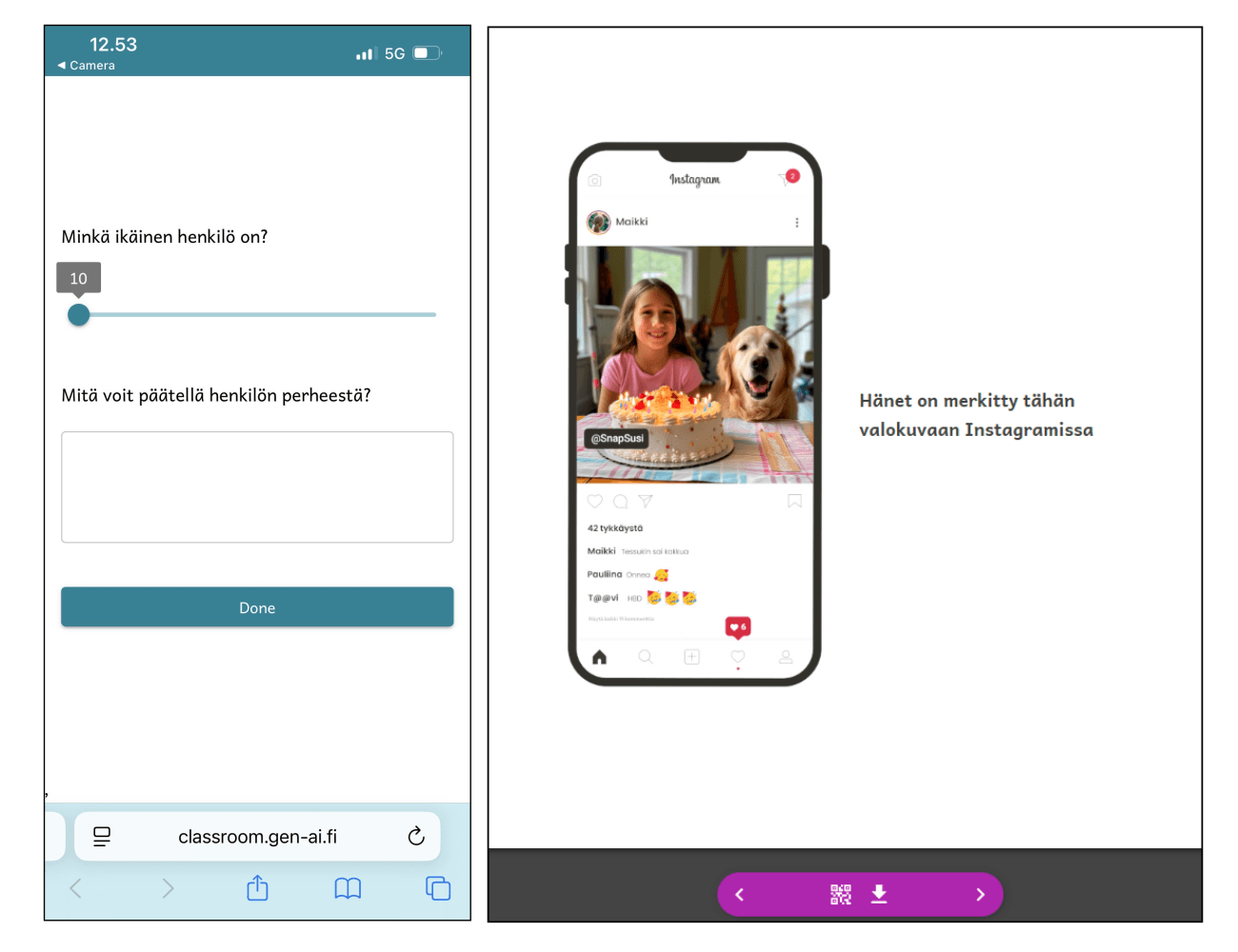
Learn together how data traces are used to build profiles of users.
Keywords: Tracking, data collection, profiling
Profiling game is a collaborative classroom game where learners explore how everyday online activities create digital traces and how those traces are used to construct user profiles. The game makes visible how data collected by social media platforms and other online services can reveal surprisingly much about people.
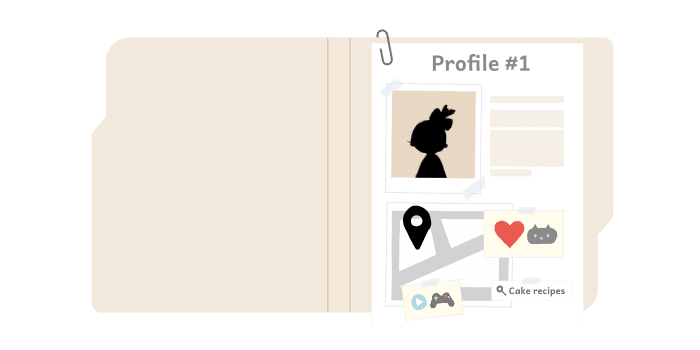
In the game, learners receive clues about the online activity of a fictional user, such as watched videos, likes, searches, and location-related data. Based on these clues, they build and refine a profile: who the person might be, how old the person is, what the person is interested in, and what else can be inferred from the data. The profile is developed step by step, and earlier assumptions may need to be revised as new data becomes available.
Profiling game helps learners understand that not all data are the same.
Some data are provided voluntarily by users, some are generated unintentionally as a by-product of online activities, and some are inferred from existing data from the user as well as data generated by other users. Learners also discover that profiling is based on probabilities and assumptions, and that even incorrect inferences can affect what content people see or how they are treated online.

The game supports critical AI and media literacy by making visible the connection between data collection, profiling, and recommendation. It encourages reflection on how one’s own digital traces are created and how they are used.
Profiling game runs entirely in the browser, locally in the classroom, and does not transfer personal data outside the class.
Key concepts: Volunteered data (data given), observed data (data traces), inferred data, profiling, large-scale data collection
Open beta available since 2023. Estimated public release: Autumn 2026.